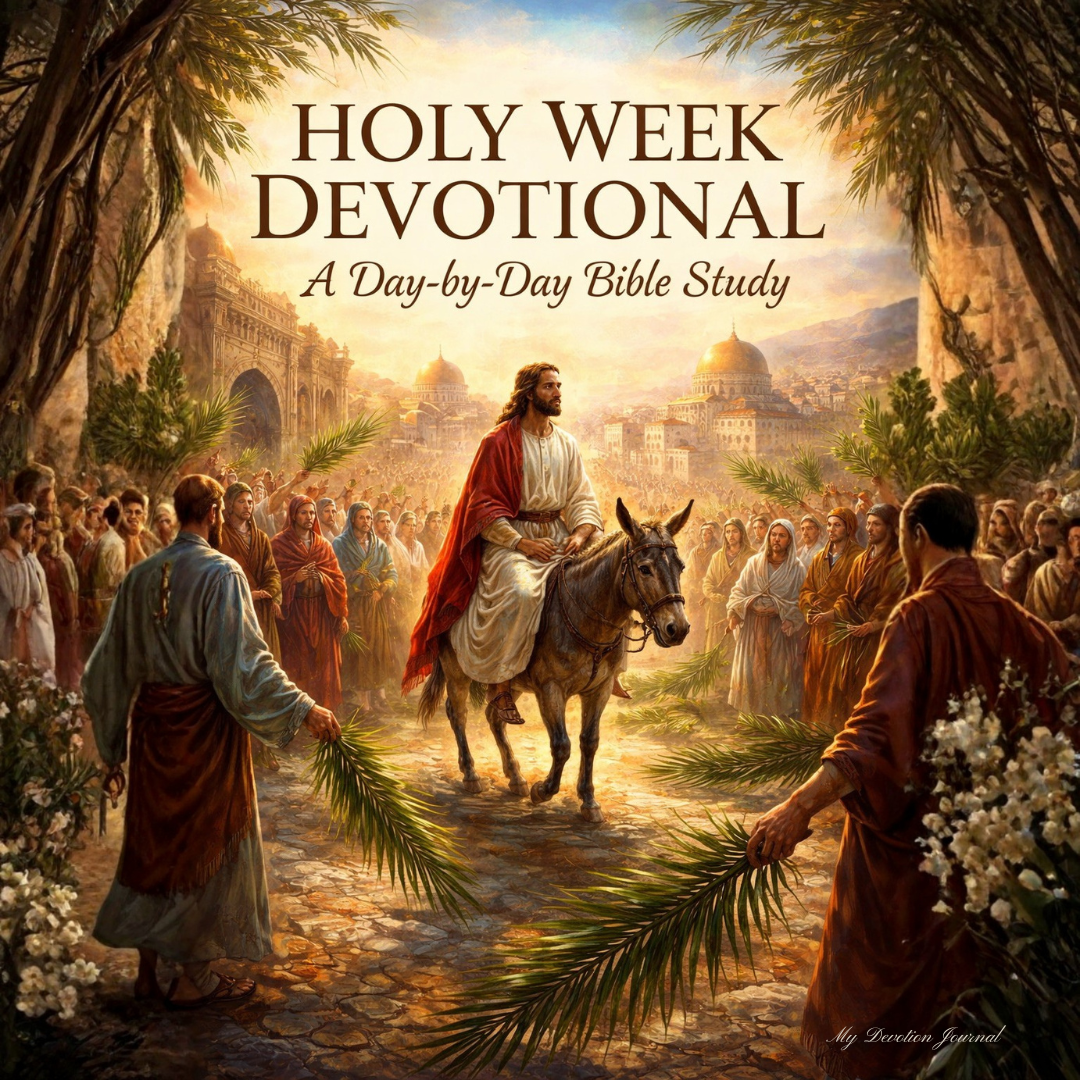
Why did Jesus cleanse the temple? The cleansing of the temple in Matthew 21 is one of the clearest moments in Holy Week where Christ exposes false worship, confronts religious corruption, and reveals His divine authority. What was meant to be a house of prayer had been turned into a place of profit, and Jesus would not leave that corruption untouched.
This was not a burst of uncontrolled emotion. The cleansing of the temple was a deliberate act of judgment. Jesus entered the temple courts as the rightful Lord of God’s house, drove out those who distorted worship, and declared that reverence for God cannot coexist with hypocrisy and greed.
This moment also confronts us today. It is easy to criticize the merchants in the temple while ignoring the ways our own hearts can drift into routine, distraction, self-interest, and outward religion without true devotion. The cleansing of the temple is not only a historical event in Holy Week. It is a warning to everyone who claims to worship God.
Why did Jesus cleanse the temple? Jesus cleansed the temple because worship had been corrupted by greed, hypocrisy, and exploitation. In the cleansing of the temple, Christ judged false worship, restored the temple as a house of prayer, and revealed His authority as the true Lord over God’s house.
This event unfolds during Holy Week, the final days leading to the cross. To see how it fits into the full timeline, read our Holy Week Devotional: A Biblical Day-by-Day Guide.
Why Did Jesus Cleanse the Temple?
Jesus cleansed the temple because the worship of God had been corrupted. Merchants and money changers were not simply doing business nearby. They had turned a sacred place into a system of exploitation. The cleansing of the temple shows that Christ will not tolerate religion that uses the things of God for personal gain. He drove them out to restore the temple as a house of prayer and to confront the hypocrisy that had been accepted by religious leaders.
The Sound of Tables Hitting Stone
Jerusalem was crowded.
Passover had drawn thousands of pilgrims into the city. Families traveled from distant regions to celebrate the feast that remembered Israel’s deliverance from Egypt. The streets were full. The temple courts were busy.
Yet something had changed inside the temple.
What should have been a place of prayer had become a marketplace.
Coins clattered across wooden tables. Merchants shouted prices for sacrificial animals. Money changers weighed currency for pilgrims arriving from foreign lands. Sheep bleated. Doves fluttered inside cages. The air carried the noise of business.
Then Jesus entered the temple.
He did not pause to observe the system.
He did not negotiate with the merchants.
Instead, He overturned the tables.
Coins scattered across the courtyard floor. Wooden benches crashed against stone. Merchants rushed to gather their animals. The entire court erupted into chaos.
Matthew records the moment with clarity:
“And Jesus entered the temple and drove out all who sold and bought in the temple, and he overturned the tables of the money changers and the seats of those who sold pigeons.” (Matthew 21:12)
For years the temple had tolerated this system.
But the Son of God would not.
And that is what makes this passage so unsettling. We often prefer a version of Jesus who comforts but never confronts, who heals but never judges, who welcomes sinners but never overturns what dishonors His Father. Yet the cleansing of the temple reminds us that the holiness of Christ is not sentimental. He loves what is pure, and He opposes what corrupts worship. That truth does not merely interpret the temple courts. It examines the church, and it examines us.
What Does the Cleansing of the Temple Mean?
The cleansing of the temple reveals far more than a correction of bad behavior. It reveals who Jesus is. He was not adjusting a flawed system. He was exposing a worship system that had been outwardly religious yet inwardly corrupt.
The temple represented the dwelling place of God among His people. Therefore, when corruption filled that space, judgment followed. The cleansing of the temple shows that external religion without reverence, prayer, repentance, and truth is unacceptable before God.
Jesus was not reacting impulsively. He was acting with holy authority. He entered the temple not as a reformer trying to negotiate change, but as the divine Son confronting what dishonored His Father.
A House of Prayer That Became a Marketplace
After overturning the tables, Jesus spoke.
“It is written, ‘My house shall be called a house of prayer,’ but you make it a den of robbers.” (Matthew 21:13)
This statement combines two Old Testament passages.
The first comes from Isaiah 56:7, where God declares that His house is meant to be a place of prayer for all nations. The temple was designed to welcome worshipers seeking the Lord.
The second reference comes from Jeremiah 7:11, where God rebukes Israel for turning the temple into a hiding place for injustice.
A “den of robbers” is not where theft occurs.
It is where thieves hide afterward.
Jesus was exposing a system that allowed religious leaders to maintain an appearance of holiness while benefiting from exploitation.
Pilgrims traveling to Jerusalem often needed animals for sacrifice. However, merchants inside the temple courts sold them at inflated prices. Money changers exchanged foreign coins for temple currency, but they charged excessive fees.
What should have facilitated worship had become an opportunity for profit.
Therefore, Jesus intervened.
That indictment still lands with force today. Worship can remain outwardly active while inwardly hollow. Churches can be busy, sermons can be heard, songs can be sung, and yet the heart can be far from God. The cleansing of the temple warns us that God is not impressed by religious activity when prayer, truth, justice, and reverence have been pushed aside.
Why the Cleansing of the Temple Matters
Jesus cleansed the temple because worship had been corrupted by greed and exploitation. Instead of helping pilgrims draw near to God, the system burdened them financially and displaced prayer. By removing the merchants, Christ restored the temple’s sacred purpose and confronted religious leaders who tolerated injustice within God’s house.
The temple courts were not neutral ground.
They represented the presence of God among His people.
When corruption filled that space, judgment followed.
The Authority of the True King
The timing of this event matters. Only one day earlier, Jesus entered Jerusalem during what we now understand as the true Palm Sunday Meaning, when the crowds welcomed Him with cries of “Hosanna,” recognizing Him as the promised Son of David. The cleansing of the temple takes place immediately after Christ’s triumphal entry, showing that the King did not come merely to receive praise. He came to confront sin and reclaim true worship.
Many expected a political king.
Instead, Jesus went straight to the temple.
His actions made a powerful statement.
He was not merely a teacher or prophet.
He was the Lord of the temple itself.
When Jesus calls the temple “My house,” He speaks with divine authority. No rabbi, priest, or prophet would normally make such a claim.
Yet Jesus did.
And His authority was unmistakable.
What Does “Den of Robbers” Mean?
The phrase “den of robbers” does not describe the place where theft happens. It describes the place where thieves retreat after their injustice is done. By calling the temple a den of robbers, Jesus accused the religious leaders of turning God’s house into a shelter for corruption. They maintained the appearance of worship while permitting exploitation to flourish.
The words cut deeply.
Jeremiah had used the same warning centuries earlier when Israel trusted temple rituals while ignoring justice and obedience.
Now Jesus repeated the indictment.
The problem was not simply commercial activity.
The problem was hypocrisy.
Religious leaders defended a system that harmed the very people who came seeking God.
The Moment After the Cleansing
Something remarkable happened next.
Matthew records that after Jesus cleared the temple courts:
“The blind and the lame came to him in the temple, and he healed them.” (Matthew 21:14)
The contrast is striking.
When corruption was removed, restoration followed.
The temple had excluded the weak and marginalized. Yet once Jesus cleansed the space, those who needed mercy came forward.
Christ healed them.
That detail matters. Jesus did not cleanse the temple merely to empty it. He cleansed it to restore it. Once corruption was removed, mercy was put on display. That is how Christ still works. He tears down what is false, not because He delights in destruction, but because He intends to restore what sin has disfigured.
True worship does not push the broken away.
It welcomes them into the presence of God.
How Does the Cleansing of the Temple Reveal God’s Character?
The cleansing of the temple reveals both the holiness of God and the mercy of God. Jesus confronts corruption because God does not tolerate injustice disguised as religion. Yet the same Christ who judges false worship also heals the blind and the lame. The cleansing of the temple shows that God’s judgment is never random or cruel. It is righteous, purposeful, and aimed at restoring worship that honors Him.
Many imagine Jesus only as gentle.
Yet Scripture shows a Savior who fiercely protects the honor of God.
His anger was not uncontrolled.
It was righteous.
The Children Who Saw the Truth
While religious leaders criticized Jesus, something unexpected happened.
Children began praising Him.
Matthew records their words:
“Hosanna to the Son of David!”
The leaders were outraged.
But Jesus responded by quoting Psalm 8:2:
“Out of the mouth of infants and nursing babies you have prepared praise.”
The contrast could not be clearer.
Those who held religious authority rejected Christ.
Those with childlike faith recognized Him.
The cleansing of the temple exposed more than corruption.
It revealed hardened hearts.
That contrast still exists. Those who pride themselves on religious knowledge can remain blind to Christ, while those who come with humble, childlike faith recognize His glory. Familiarity with sacred things is not the same as true worship. A person can stand near the temple and still miss the King.
How Does This Passage Point to Christ?
The cleansing of the temple points to Christ as the true Lord of worship and the fulfillment of everything the temple was meant to be. He is more than a prophet condemning corruption. He is the Son who has authority over His Father’s house.
Within days, Jesus would go to the cross, the moment we explore in our Why Did Jesus Die On The Cross? Biblical Answer devotional. Through His death and resurrection, He would open direct access to God for all who believe. The old temple system could never cleanse the conscience. But Christ, through His finished work, became the true and final meeting place between God and humanity.
This is why the cleansing of the temple matters so deeply. It is not only about what Jesus removed. It is about what Jesus replaced. In Him, sinners are brought near to God not through corrupt systems, but through grace alone.
Key Theological Truths
- Jesus possesses divine authority over worship and sacred space.
- God rejects religious systems that exploit people.
- True worship centers on prayer, reverence, and obedience.
- Christ confronts corruption but restores the humble.
- The temple ultimately points to Jesus as the true dwelling place of God.
Frequently Asked Questions About the Cleansing of the Temple
Jesus overturned the tables to confront corruption in the temple and restore it as a place of prayer rather than profit.
Yes. The Gospels indicate one cleansing early in His ministry and another during Holy Week.
Yes, but His anger was righteous. It was directed at sin and false worship, not uncontrolled emotion.
It shows that God rejects empty religion and calls for worship that is sincere, reverent, and centered on Him.
Journal Reflection
Use these prompts in your prayer journal as you reflect on this passage:
- Have I allowed routine or distraction to weaken my reverence for worship?
- Are there habits in my life that crowd out prayer?
- Do I resist correction when Scripture confronts my priorities?
- What does it mean to recognize Jesus as Lord over every area of life?
- How can I pursue deeper devotion rooted in truth rather than emotion?
Writing down prayer and reflection helps anchor truth in daily life. Many readers begin by understanding what a guided prayer journal is and how it structures daily devotion, Bible study, and written prayer around Scripture, then apply that rhythm consistently using a daily devotional journal.
Write slowly. Pray honestly. Invite the Lord to examine your heart.
Continue the Holy Week Devotional Series
Palm Sunday Devotional: Matthew 21 Explained
Cleansing of the Temple Devotional: Matthew 21 Explained
Matthew 23 Meaning: Jesus Confronts Religious Hypocrisy
Why Judas Betrayed Jesus: The Truth in Matthew 26:14–16
The Last Supper and Gethsemane: Matthew 26 Meaning
Why Jesus Died on the Cross: Matthew 27 Explained
Why Jesus’ Tomb Was Guarded: Matthew 27:62–66 Explained
The Resurrection: Why the Empty Tomb Changes Everything
A Final Reflection on True Worship
The cleansing of the temple was not merely a dramatic moment during Holy Week.
It was a declaration.
God will not share His house with corruption.
Jesus entered the temple and confronted a system that had replaced reverence with profit. Yet after judgment came restoration. The blind were healed. Children praised the Messiah.
This moment reminds us that Christ still calls His people to purity in worship.
The Cleansing of the Temple warns against religious activity that lacks reverence for God. At the same time, it invites believers to return to prayer, humility, and obedience.
When Christ clears away what does not belong, He makes room for something better.
He restores worship.
He restores hearts.
And He reminds us that true devotion begins with recognizing Him as Lord.
Christ does not share His authority. He purifies what belongs to Him.